Search More

Showing posts with label Health. Show all posts

Tuesday, November 23, 2010

Why mixing alcohol and caffeine is so deadly


Americans love their caffeine - in coffee, colas and now in their alcohol.
L.A. Fuel Energy Gum - The world's strongest energy gum 1 gum = 2 energy drinks - www.lafuel.com
But mixed together, particularly in high volumes, the combination of caffeine and alcohol can be deadly.


caffein
alcohol

That's why toxicologists and doctors are encouraged to see the U.S. Food and Drug Administration crack down on the makers of drinks such as Four Loko and Joose, which experts compare to two cups of coffee combined with the equivalent of four or five beers.


read more

Sunday, November 21, 2010

Pope says condoms sometimes permissible to stop AIDS


The use of condoms to stop the spread of AIDS may be justified in certain cases, Pope Benedict says in a new book that could herald the start of sea change in the Vatican's attitude to condoms.

In excerpts published in the Vatican newspaper on Saturday ahead of the book's publication next week, the pope cites the example of the use of condoms by prostitutes as "a first step toward moralization" even though condoms are "not really the way to deal with the evil of HIV infection."

While some Roman Catholic leaders have spoken in the past about the limited use of condoms in specific cases to stop the spread of HIV/AIDS as a lesser of two evils, this is the first time the pope has mentioned the possibility himself in public.

The Vatican newspaper unexpectedly published significant excerpts from the book on Saturday night, days before extracts were initially due to be made public.

The pope's words appeared to be a major shift in the Vatican's attitude. While no formal position existed in a Vatican document, the majority of Church leaders have been saying for decades that the use of condoms was not even part of the solution to fighting aids.

The late cardinal John O'Connor of New York famously branded the use of condoms to stop the spread of AIDS as "The Big Lie."

Last year, the pope caused an international uproar when he told journalists taking him to Africa that condoms should not be used because they could worsen the spread of AIDS.

The new book, called Light of the World, is made up of Benedict's responses to questions by German Catholic journalist Peter Seewald over a month of meetings at the papal summer residence.

The pope says that the "sheer fixation on the condom implies a canalization of sexuality" where sexuality is no longer an expression of love "but only a sort of drug that people administer to themselves."

After the pope first mentions that the use of condoms could be justified in certain limited cases, such as by prostitutes, Seewald asks: "Are you saying, then, that the Catholic Church is actually not opposed in principle to the use of condoms?"

The pope answers: "She of course does not regard it as a real or moral solution, but, in this or that case, there can be nonetheless, in the intention of reducing the risk of infection, a first step in a movement toward a different way, a more humane way, of living sexuality."

Friday, November 19, 2010

Haiti cholera clashes reach capital Port-au-Prince

Protests linked to the outbreak of cholera in Haiti have spread to parts of the capital, Port-au-Prince.
Police fired tear gas as demonstrators set up barricades and threw rocks at United Nations vehicles. On Monday, clashes between residents and UN troops in the north had left two people dead.
Some Haitians blame UN peacekeepers from Nepal for bringing cholera to the country - a claim denied by the UN.


US health experts say Haiti is vulnerable to further outbreaks.
Sporadic gunfire could be heard on Thursday as protesters took to the streets of Port-au-Prince, which was devastated by a massive earthquake in January.
Hundreds of youths erected barricades of burning tyres and attacked vehicles belonging to the UN mission (Minustah).


The protesters shouted slogans like: "Cholera: It's Minustah who gave it to us!" and "Minustah go home!"
Cholera is present in all 10 of Haiti's regions. About 1,100 people have died from the disease since it emerged in the country last month.


Most of the 38 deaths recorded in the capital have been in the slum district of Cite Soleil.
The unrest comes less than two weeks before a presidential election, due on 28 November.
Tainted food


In its latest update, the Atlanta-based Centers for Disease Control (CDC) said the course of the disease was "difficult to predict" as it was the first cholera outbreak in Haiti for more than a century.

Oxfam's Julie Schindall: "The implications are very serious...we have to move as fast as we can... and now we've been stopped"

"The Haitian population has no pre-existing immunity to cholera, and environmental conditions in Haiti are favourable for its continued spread," it said.
The CDC said about 1.3m Haitians remained in camps following the earthquake and the camps' "ability to provide centrally treated drinking water, adequate sanitation, handwashing facilities, and health care varies".
Just 17% of Haitians had access to adequate sanitation before the quake, the CDC said, adding that the situation had considerably worsened since then.


The first cases of cholera - a water-borne disease - were reported near the Arbonite River north of Port-au-Prince. However future outbreaks could result from tainted food, the CDC warned.
It is unclear how cholera reached Haiti. There are claims that it originated from septic tanks at a base for UN peacekeepers from Nepal, but the UN says there is no evidence for this.
Cholera causes diarrhoea and vomiting, leading to severe dehydration. It can kill quickly, but is treated easily through rehydration and antibiotics.


At least 17,000 cases have been reported across Haiti.
The CDC and other agencies are trying to distribute oral rehydration solutions to combat the spread of the disease.


source:http://www.bbc.co.uk/news/world-latin-america-11791172

Thursday, November 18, 2010

New Cholesterol Buster

New Drug Dramatically Increases HDL, or 'Good,' Cholesterol, Says Study


The estimated 30 million Americans currently taking statin medications for cholesterol may have a new choice for lowering their levels of "bad" cholesterol in the years to come. An experimental drug was shown to have a dramatic effect on cholesterol levels, lowering the bad stuff and raising the good.


Investigators presented the trial results this morning at the American Heart Association meeting in Chicago. Research showed that the new cardiovascular medication, known as anacetrapib, more than doubles the level of good HDL cholesterol and cuts bad LDL cholesterol in half.


"My eyes popped right open when I saw the results," said Dr. Christopher P. Cannon, senior investigator of the TIMI Study Group in the cardiovascular division of Brigham and Women's Hospital and lead author of the study. "Anyone who has seen this data is more excited than they have been in 10 years for new treatments for heart disease."


Anacetrapib was being used in a trial called DEFINE -- short for Determining the Efficacy and Tolerability of CETP Inhibition with AnacEtrapib. It included more than 1,600 patients who took either anacetrapib or a placebo. As is standard procedure with new medications, it was being tested first to make sure it was safe; tests of how well it worked would come later. 


source:http://abcnews.go.com/Health/Cholesterol/good-cholesterol-dramatically-raised-drug-anacetrapib-study/story?id=12164378

Sunday, November 14, 2010

McDonald's and PepsiCo to help write UK health policy (wew)


Department of Health putting fast food companies at heart of policy on obesity, alcohol and diet-related disease


the Department of Health is definitely putting the fast meal companies McDonald's and KFC and processed drink and food manufacturers such as PepsiCo, Kellogg's, Unilever, Mars and Diageo in the centre of writing government protection plan on obesity, alcohol in addition to diet-related disease, the protector has learned.

In an overhaul of public wellbeing, said by campaign groups to be the same as handing smoking policy onto the tobacco industry, health secretary Andrew Lansley has developed five "responsibility deal" companies with business, co-chaired simply by ministers, to come " up " with policies. Some these are expected to be included in the public health white paper due inside the next month.

The groups are dominated by nutrition and alcohol industry people, who have been invited to suggest measures to be able to tackle public health downturn. Working alongside them tend to be public interest health along with consumer groups including which?,Cancer Research UK along with the Faculty of Public health. The alcohol responsibility offer network is chaired by head of the lobby team the Wine and heart Trade Association. The food network to be able to tackle diet and illnesses includes processed food manufacturers, fast food companies, and also Compass, the catering company famously pilloried by Jamie Oliver because of its school menus of egypr twizzlers. The food deal's sub-group at calories is chaired by means of PepsiCo, owner of Walkers crisps.

the class leading supermarkets are an each strong presence, while the responsibility deal's training group is chaired by Fitness Industry Association, which is the lobby group intended for private gyms and fitness instructors.

In early meetings, these commercial partners happen to be invited to draft priorities and identify barriers, including EU legislation, that they would like removed. They have been assured by Lansley that he desires to explore voluntary not regulating approaches, and to service them in removing hurdles. Using the pricing connected with food or alcohol to change consumption continues to be ruled out. One group was told the fact that health department did not desire to lead, but rather hear through its members what really should be done.

Professor Sir Ian Gilmore, the best liver specialist and until recently president on the Royal College of professionals, said he was very concerned by emphasis on voluntary partnerships with industry. A member belonging to the alcohol responsibility deal community, Gilmore said he had decided to co-operate, but he doubted whether there will probably be "a meaningful convergence concerning the interests of business and public health considering that priority of the drinks industry was in making money for shareholders although public health demanded a cut in consumption".

he / she said: "On alcohol there exists undoubtedly a need pertaining to regulation on price, availability and marketing and there's a risk that discussions shall be deflected away from regulation that may very well be effective but would have an effect on sales. On food labelling we certainly have listened too much into the supermarkets rather than looking for traffic lights [warnings] which usually health experts recommend. " Employers are being asked to take with more responsibility for employees within a fourth health at perform deal. The fifth network is charged with modifying behaviour, and is chaired by National Heart Forum. This group is likely to be working with the innovative Cabinet Office behavioural insight unit, which is exploring options for making people change their own behaviour without new guidelines.

Lansley's public health reforms are seen as a test case for wider Conservative coverage on replacing state treatment with private and company action.

While public interest groups are doing drawing up the opportunities, many have argued of which robust regulation is needed to manage junk food and booze misuse.

The Faculty associated with Public Health, represented on some the deal networks, has feedback a ban on trans weight and minimum alcohol pricing. Professor Lindsey Davies, FPH us president, said: "We are hopeful that engaging with all the food industry will lead to changes in the quality and healthiness belonging to the products we and your children eat. It can be done to make progress on issues for instance salt reduction through voluntary agreements, and we're keeping a great open mind until all of us see what comes right out the meetings, but we take into account that there is continue to a role for regulation. "

Responding to criticism this industry was too prominent while in the plans, the Department involving Health said: "We are constantly in touch with expert bodies, including those within the public health field, to help you inform all our work. For the forthcoming criminal court health white paper we've engaged an array of people, as we can also be doing to help people develop the responsibility package drawn from business, the actual voluntary sector, other non-governmental companies, local government, as well as public health body frames. A diverse range of experts will also be involved. "

He added that this government wanted to develop public health through voluntary agreements with business and also other partners, rather than through rules or top-down lectures as it believed this approach will be far more effective plus ambitious than previous work.

An over-arching board, chaired through Lansley, has been create to oversee the work from the five responsibility deal systems, with representatives of local government along with a regional health director – but it surely too is dominated by food, alcohol, advertising along with retail industries. Gilmore feedback a better balance of commercial interests and separate experts on it.

Other experts have expressed concern at Lansley's tactic. Professor Tim Lang, a member from the government's advisory committee on obesity, doubted the drink and food industry's ability to get a grip of itself. "In public well being, the track record of industry will never be good. Obesity is the systemic problem, and industry is locked into service plan its own narrow pastimes, " said Lang.

"I am deeply troubled to get sent signals from your secretary of state concerning working 'with business' and the any action has got to be soft 'nudge' action. "

Jeanette Longfield, head in the food campaign group sustain, said: "This is roughly the same as putting the tobacco industry responsible for smoke-free spaces. We know this 'let's all get across the table approach' doesn't work, because we've all tried using it before, including the past Conservative government. This just isn't 'big society', it's significant business. ".

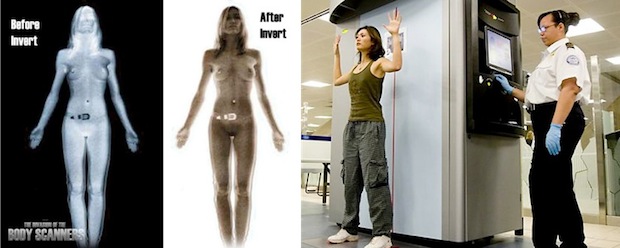
Airport body-scan radiation


Do you have traveling with airplane  and get full body scanned? What did you fell? was it make your head buzzing? Or nothing happened?
Some people who had this treat feels their head buzzing. Is the full body scan in airport really safe for human? Or it just only for our baggage? Here the report from CNN.


They're arriving at airports across the country. Some complain they are invasive and an assault on our privacy. But are body scanners at security checkpoints dangerous?


Some scientists and two major airline pilots unions contend not enough is known about the effects of the small doses of X-ray radiation emitted by one of the two types of airport scanning machines.


The Transportation Security Administration's advanced imaging technology machines use two separate means of creating images of passengers -- backscatter X-ray technology and millimeter-wave technology.


At the end of October, 189 backscatter units and 152 millimeter-wave machines were in use in more than 65 airports. The total number of imaging machines is expected to near 1,000 by the end of 2011, according to the TSA.


While the TSA says the machines are safe, backscatter technology raises concerns among some because it uses small doses of ionizing radiation. The use of millimeter-wave technology hasn't received the same attention, and radiation experts say it poses no known health risks.


The risk of harmful radiation exposure from backscatter scans is very small, according to David Brenner, director of the Center for Radiological Research at Columbia University and a professor of radiation biophysics.
Privacy group sues TSA over scanners
RELATED TOPICS


    * Transportation Security Administration
    * Air Travel
    * Domestic Security Policy
    * Passenger Screening


But he said he is concerned about how widely the scanners will be used.


"If you think of the entire population of, shall we say a billion people per year going through these scanners, it's very likely that some number of those will develop cancer from the radiation from these scanners," Brenner said.


Skin cancer would likely be the primary concern, he said. Each time the same person receives a backscatter scan, the small risk associated with the low dose of radiation is multiplied by the number of exposures.


Brenner said the risk to an individual is "very small indeed" for a single scan. He said he is most concerned about frequent fliers, pilots and young people, because children are more sensitive to radiation.


Backscatter technology is safe, the TSA says, and enables the detection of nonmetallic threats, including weapons and explosives. It has been evaluated by the Food and Drug Administration's Center for Devices and Radiological Health, the National Institute of Standards and Technology and the Johns Hopkins University Applied Physics Laboratory, according to the agency.


"TSA sets strict standards for all of its technology to include detection capabilities, operational capabilities and health and safety standards. The two approved technologies that meet all of those standards are backscatter and millimeter wave," the agency said in a statement.


Full-body scanning is optional for all passengers passing through U.S. airports. Those who opt out of the screening technique will receive additional screening, including an enhanced pat-down procedure.


Two pilots unions, representing some 16,000 pilots, have urged their members to avoid full-body scanning, citing health concerns as a key reason.


Anyone who flies is exposed to increased cosmic radiation due to high altitudes, and many pilots experience this exposure almost daily. The TSA says each backscatter scan emits radiation equivalent to just two minutes of cosmic radiation at altitude.


Peter Rez, a professor of physics at Arizona State University, disagrees. Rez has independently calculated the radiation doses of backscatter scanners using the images produced by the machines.


"I came to the conclusion that although low, the dose was higher than they said," he said.


Based on his analysis, Rez estimates each scan produces radiation equivalent to 10 to 20 minutes of flight.


In April, four science and medical faculty members at the University of California, San Francisco, sent a letter to the director of the White House Office of Science and Technology Policy expressing concerns about potentially serious health risks related to the X-ray scanners.


In the letter they claimed there could be risks to various population segments, including children, senior citizens and women susceptible to breast cancer. The group also called for a clear screening policy for pregnant women once possible risks to the fetus are known. The group wants a review of existing data and recommendations for additional study by an independent panel of scientific experts.


Last month, the Department of Health and Human Services provided a point-by-point response to their concerns, asserting that the potential health risks from full-body X-ray screening are "minuscule."


The letter cites expert analysis, reports and recommendations spanning two decades. "As a result of those evidence-based, responsible actions, we are confident that full-body X-ray security products and practices do not pose a significant risk to the public health."


Dr. Marc Shuman, a cancer expert and one of the concerned California professors, said the four are in the process of writing a detailed response to the Department of Health and Human Services but called the agency's arguments "seriously flawed." Shuman said they believe there should be a moratorium on full-body scanning until further study is conducted.


The American College of Radiology, an organization of more than 34,000 professionals, including radiologists, oncologists and medical physicists, said it believes backscatter technology is safe.


"The ACR is not aware of any evidence that either of the scanning technologies that the TSA is considering would present significant biological effects for passengers screened," the organization said in a statement.


The organization referenced a report from the National Council on Radiation Protection and Measurements, citing that a traveler would need to receive 100 doses of backscatter radiation per year to reach what it calls a "Negligible Individual Dose."


"By these measurements, a traveler would require more than 1,000 such scans in a year to reach the effective dose equal to one standard chest X-ray," the group's statement said.


Rez estimates 50 to 100 doses of backscatter radiation would be equivalent to a chest X-ray. But he said the dose is not his main concern with backscatter machines.


"The thing that worries me the most, is not what happens if the machine works as advertised, but what happens if it doesn't," Rez said. A potential malfunction could increase the radiation dose, he said.


But there's really no case to be made for deploying any kind of body-scanning machine, Rez said.


The probability of dying from radiation from a body scanner and that of being killed in a terror attack are roughly the same, he said. About one in 30 million.


"They're both incredibly unlikely events. These are still a factor of 10 lower than the probability of dying in any one year from being struck by lightning in the United States."

How Does E-Cigarette Work? (The South Beach Smoke™)

And then how does it works? Is it like handphone that must be charge? What about term electronic that need electricity?
what if i get electricity because i suck that thing? Well let's find it now. I mean now.....Yeah....check this out dude

Technology has enabled engineers to create a safer cigarette for everyone. Using the device is simple enough. If you know how to smoke a regular cigarette, then you'll know how to smoke an electronic cigarette.


A Look Inside The Electronic Cigarette

Here's a simplified explanation of the 4 step process that occurs when you enjoy an electronic cigarette:

Step #1: A flow sensor will detect that air is traveling through the e-cigarette when the user inhales.


Step #2: Liquid nicotine and flavoring contained in the cartridge goes into the atomization chamber while the Smart Chip controls the amount.


Step #3: The Heating Vapor Coil "atomizes" the liquid creating a rich vapor very similar to smoke. While this vapor is enjoyed, the indicator light is signaled.


Step #4: When the smoker finishes inhaling, the LED in the indicator light fades out. The smoker is free to partake in additional drags on the device.

We are pleased to report that all of this occurs in an extremely safe manner. In fact, it is virtually unattainable to accidentally start a fire with an electronic cigarette, another huge benefit that can potentially save lives.

Electronic Cigarettes (Green Cigarettes): Are They Really Better For Your Health?


Do you smoke? If you don't smoke and hate smoker because they make people around them so hard to breath. And you think cigarettes must be destroy from the world because the smoke is poisonous and dangerous. The smoker now have a weapon for alternative cigarettes. It called Electronic cigarettes. What is that? Is it safe for active and passive smoker? Is the smoke safe for environment? Well let's find out about that.

Electronic cigarettes have recently grabbed the attention of countless tobacco users across the United States. Also known as the “E-Cigarette, ” these groundbreaking devices are raising a lot of eyebrows. Are they really a healthier and cheaper alternative to traditional cigarettes? Creators say these devices are very different from the traditional cigarette, and thousands of smokers have already made the switch with hopes the device will be better for their health. But can this clever looking contraption live up to all the hype? Is there any scientific evidence that electronic cigarettes truly are the #1 smoking alternative?

When we first inspected the electronic cigarette, it was easy to see that the device in fact does look and feel like a traditional cigarette. Creators and product users are declaring that you can now enjoy a healthier cigarette without the bad smells, second-hand smoke, or cancer causing chemicals. Plus they claim you can still get your nicotine fix. Sounds almost too good to be true right? That's what we thought as well. So we had our own Vanessa Michaels test these outstanding claims. And the results, to say the least, were very shocking. Here are just a few of the advantages that South Beach Smoke™ electronic cigarettes have been claiming on their website:

* No tar, tobacco, carbon monoxide, or ash.
* Get the same amount of nicotine as a regular cigarette.
* Each cartridge costs less than $2 and is equivalent to an entire pack of cigarettes.
* You can save over Thousands of $$$ each year.
* You won't "smell" like a smoker any longer.
* Different flavors are available.
* No more second-hand smoke.

When Vanessa received her electronic cigarette trial kit, she passed the device around so everyone could take a closer look. Sure enough, the product looked and felt like a cigarette. The device was also very well made and seemed safe to use. When Vanessa took her first few drags on the device, we all stared in wonder. It looked like Vanessa was smoking in the office, but with one huge difference. There was no tobacco smell and no second-hand smoke. Just a harmless vapor.

We were also able to ensure the money savings claims. Each cartridge was equivalent to approximately 1 pack of cigarettes at a cost of only a couple of dollars each, meaning that smokers who smoke 1 pack per day can easily save over $1, 000 per year. Since the device satisfied Vanessa's nicotine cravings, we knew that we had found a product that actually works.

We decided to study exactly what expert medical doctors and product users had to say aboute-cigarettes like the South Beach Smoke™ electronic cigarette. The results were astonishing. In fact, the United Health Organization concluded that "In the short time that electronic cigarettes have become popular, the number of people who have been able to quit smoking and stay cigarette free have risen by an estimated 300%. No other methodology has proven so successful in such a short period of time. "


Four very well known doctors, from the popular TV show “The Doctors”, have shared great insight with us on the topic of the electronic cigarette. The electronic cigarette was featured as one of their top 10 key health trends for 2009.
“The greatest issue with cigarettes is the 500+ other ingredients added, not just the nicotine. Do we suggest this for non-smokers? Of course not, but for current smokers this is the most revolutionary device to date” - Dr. Travis Stork


Doctors Evaluate the Electronic Cigarette

The Doctors, Clockwise, from left to right. Dr. Travis Stork, Dr. Jim Sears, Dr. Lisa Masterson and Dr. Drew Ordan.

None of the doctors on the show are smokers, so they used a female smoker, Beverly, as a case study. Beverly had struggled with smoking for 15 years. By day 2, this former "heavy smoker" had eliminated the use of regular cigarettes all together, and was pleased to report that she now only uses her electronic cigarette. She admits that the E-Cigarette is very satisfying and definitely recommends it to other smokers.